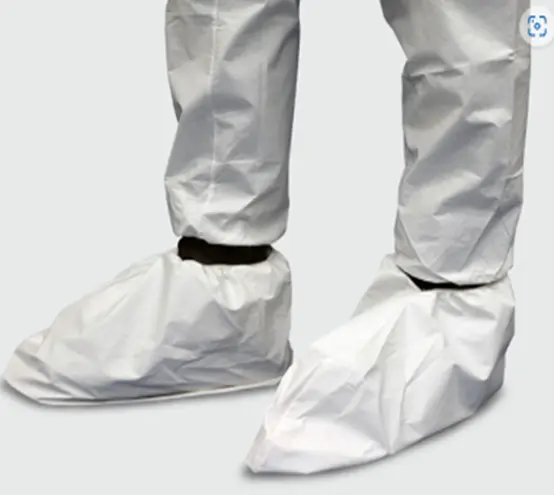
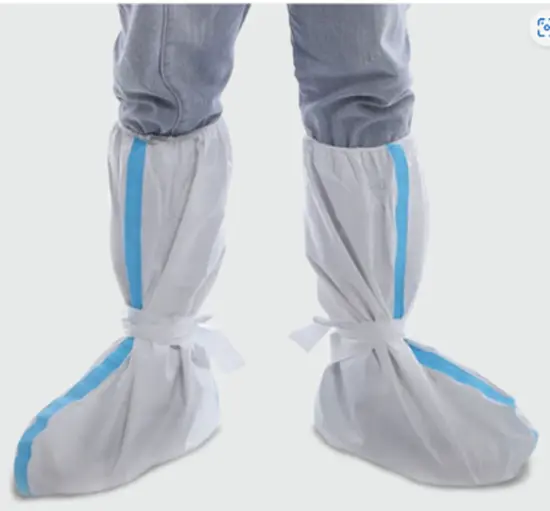
Conduire supplies safety footwear for construction, oil and gas, logistics and industrial sites across Qatar. The range includes high-ankle S3 HRO safety shoes with toe and midsole protection and a heat-resistant outsole, plus disposable chemical shoe and boot covers for clean areas, labs and contamination control. Tell us the work environment, quantity and size split, and we'll quote footwear to match.
منتجات حماية القدمين
اختر منتجًا لعرض التفاصيل الكاملة، أو أضفه مباشرة إلى سلة الاستفسار.

Reading the safety shoe code (EN ISO 20345)
| Code | What it includes |
|---|---|
| SB | Basic 200 J toe cap only |
| S1 | Toe cap, closed heel, antistatic, energy-absorbing heel |
| S1P | S1 + penetration-resistant midsole |
| S2 | S1 + water-resistant upper |
| S3 | S2 + penetration-resistant midsole and cleated outsole |
| S5 | S3 in a waterproof rubber or PU boot |
Extra marks you'll see:
- HRO: outsole resists contact heat up to 300 °C (hot surfaces, welding areas).
- SRC / SR: slip resistance tested on standard surfaces.
- WR: whole shoe water-resistant.
For most Qatar construction and oil and gas sites, S3 is the usual minimum. Add HRO for hot-work areas and hot outdoor surfaces.
Frequently asked questions
What is the difference between S1P and S3?
Both have a toe cap and a midsole that stops nails. S3 adds a water-resistant upper and a cleated outsole for outdoor sites.
Do you supply mixed sizes for a workforce?
Yes. Send us the size breakdown and we'll quote per size.
When should I use disposable shoe covers?
In labs, clean areas, and wherever chemical contamination must not be carried out on footwear.
How often should safety shoes be replaced?
Replace them when the sole is worn smooth, the toe cap is exposed or damaged, or after a heavy impact.